Database Reactivation
How to re-engage old leads with text messages in Australia
Send a text to a lead you have not spoken to in 12 months and here is what comes back, and what to do with each type of reply.
Yes, your old leads are worth going back to. The real question is how you do it, because the method decides whether you get meetings or unsubscribes.
Yes, your old database is worth reactivating. Every person in it once asked you about something, and you paid to get them there. The question that actually decides whether you make money from it is not whether to do it. It is how you do it, because the method is the difference between a calendar full of meetings and a pile of unsubscribes.
This post covers why those old contacts are still worth your time, the two ways businesses usually try to work them and why both fall over, and what changes when you can hold a real conversation with every one of them at once.
Every name in your database cost you something. Ad spend, a referral, a trade show, someone’s afternoon on the phone. That money is spent whether you use the list or not. So the comparison is not “reactivation versus nothing”. It is “reactivation versus paying again to generate the same number of conversations from strangers”. For a service business with a decent customer value, going back to people who already know you wins that comparison easily. We have written more on this in our post on why a dormant database is not dead.
The person who enquired about a home loan two years ago and never proceeded is not a cold contact. They know your name, they had a reason to reach out, and their situation has almost certainly changed since. Maybe the timing was wrong. Maybe they went with someone else and are now out of contract. You do not know until you ask.
This works even if your business has moved on. If you have pivoted or launched something new, you can say exactly that: “You spoke to us a while back about X. We have since started doing Y and I thought it was worth letting you know.” That is a legitimate reason to get in touch, and it lands better than any cold message because there is a history behind it.
There are two situations where you should not touch the list, and they are both about how it was built rather than how old it is.
The first is consent. If people in your database never actually asked to hear from you, or you cannot show that they did, you are sending marketing to people who did not agree to it. In Australia that puts you on the wrong side of the Spam Act, and the ACMA’s guidance on avoiding spam is clear that you need consent from each person, a way for them to unsubscribe, and a record of who consented and when. Clean up the consent picture first, or start with a re-permission message to the contacts you are sure about.
The second is people who left for a reason that has not changed. A client who walked because of a bad experience, or a lead who told you a clear no, is not a reactivation opportunity. They are feedback.
Everyone else in the list is fair game. Which brings us to the real problem.
Most businesses that try reactivation once never try it again. It is not because the list was dead. It is because the method they used was never going to work.
This is what most people do. Export the list, load it into an email or SMS tool, send a sequence with a special offer, and wait.
It does produce something. A few people reply, a couple of them book, and it costs almost nothing to run. But look at what happens to the rest of the list. People who get a one way promotional message from a business they had forgotten about do what you would do. They ignore it, they unsubscribe, they block the number, or they report it as spam. Every send burns a slice of the database and damages your sending reputation for the next one. After two or three rounds the list really is dead, and you killed it.
The deeper problem is that a blast cannot listen. Someone replies “actually yes, we are looking at this again in November” and the sequence just sends the next scheduled message. The one person who put their hand up gets treated exactly like the people who did not.
The other approach is to have people work the list conversationally. A salesperson or a VA sits down with a few hundred records and calls or texts them one by one.
This is the right idea. A real conversation, personalised to what the person originally asked about, is exactly what reactivates a dormant lead. The trouble is the cost of doing it at scale. A few hundred conversations is weeks of someone’s time. Most of those conversations are a no, a voicemail, or a wrong number, and the constant rejection wears people down fast. Within a fortnight the reactivation work slides to the bottom of the to do list and the team goes back to chasing fresh leads, because fresh leads say yes more often.
So you end up choosing between a method that is cheap but burns the list, and a method that works but that nobody will keep doing. That is the actual reason reactivation gets written off.
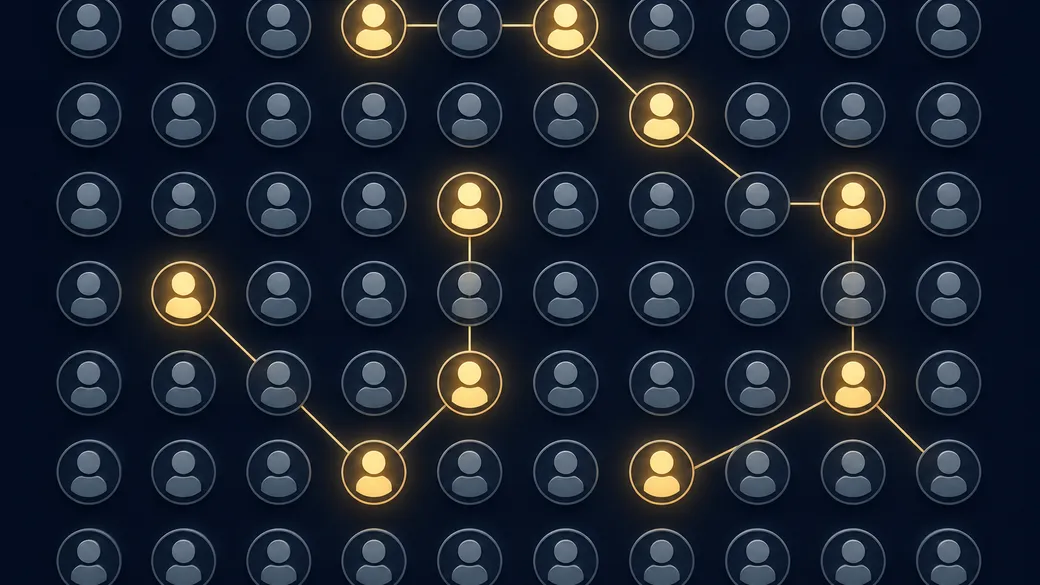
An AI sales agent removes the trade off. It can hold a real two way conversation with every contact in the database at the same time, and it does not get tired of hearing no.
The agent opens with the context it has on each person, so it knows who they spoke to, what they asked about and roughly when. That means the first message reads like a follow up from someone who remembers them, not a promotion. When they reply, it reads the reply and responds to what they actually said. “Not right now” gets a different answer to “who is this?” which gets a different answer to “yes, what are your rates now?”
That is the part a blast can never do and a human team cannot do a thousand times over.
Most of the people who reply are not ready today. Some are ready next quarter. Some are waiting on a lease, a contract, a budget. The agent finds that out, notes the real date, and comes back at roughly the right time rather than letting the contact drop again. The ones who are ready now get qualified against your criteria and booked straight into a calendar, and the ones who need a person get handed to your team with the whole conversation attached.
You get the outcome of the manual approach, a personal conversation with every contact, at the cost profile of the blast. At ParadiseAI this is what the Database Reactivation AI agent does, running inside the CRM you already use so nothing gets exported or re-keyed.
Whichever method you use, the campaigns that produce meetings do these four things.
Dedupe it. Remove dead numbers and bounced emails. Suppress anyone who has ever asked to stop hearing from you, and make sure new opt outs are honoured the moment they come in. This also tells you how many contacts are genuinely reachable, which is usually fewer than the raw count and worth knowing before anyone sets expectations.
The first message should make it obvious you know who they are and why you are getting in touch. Reference what they enquired about. If the offer has changed, say so plainly. Do not lead with a discount, because a discount to someone who has forgotten you looks like spam.
A dormant contact who replies is warm right now and will not stay warm for long. Whoever or whatever handles the reply needs to respond the same day, with the history in front of them. If it is a person, protect that time. If it is an agent, this is the bit it does best.
People come back into market on their schedule, not yours. A campaign that runs for a fortnight and stops misses everyone whose timing was six weeks out. Run reactivation quietly in the background, at a pace the calendar can absorb, and let it catch people as they become ready.
Yes, as long as the people in the list once asked to hear from you. They cost you money to acquire, they know your name, and their circumstances have changed since they went quiet.
What decides the result is the method. Blast campaigns are cheap and burn the list. Human calling works and nobody sustains it. A conversational AI agent gives you the personal conversation with every contact, at scale, without your team carrying the rejection, and it books the ones who are ready straight into your calendar.
If you want to know what is actually sitting in your database before you commit to anything, the free revenue engine audit will tell you how many contacts are reachable and what a first pass would look like.
Older than most people assume. What matters is whether the person once asked you about something, whether you can still show that, and whether you have something relevant to say to them now. A two year old list of real enquiries is usually in better shape than a six month old list of scraped names.
The method. A one way blast to the whole list gets ignored, blocked and reported. A team calling through the list by hand gets worn down by rejection and stops. In both cases the list gets written off as dead when it was never properly worked.
A win-back campaign is usually one offer sent to lapsed customers. Database reactivation covers everyone in the CRM who went quiet, including leads who never bought, and it is a conversation rather than an offer. A win-back can sit inside it.
You need something that can hold a two way conversation with a lot of people at once and keep track of where each one is up to. A small list can be worked by a person with a spreadsheet. Past a few hundred contacts it becomes a full time job, which is where an AI agent earns its place.
It depends on your list, your offer and the method you use to work it, so anyone quoting you a reply rate from someone else's campaign is guessing. Run a first batch, count real conversations and booked meetings against what it cost, and scale from your own numbers.
Send a text to a lead you have not spoken to in 12 months and here is what comes back, and what to do with each type of reply.
You called once, maybe twice, then nothing. Here is what causes mortgage broker leads to go cold and what actually gets them talking again.
Most businesses sit on thousands of contacts they have written off. Working them properly is the cheapest revenue they will book all year.
We map where your leads go quiet, then show you the conversations an agent would have had. Thirty minutes, no obligation.