
Speed to Lead
Voice AI vs SMS for lead follow-up in Australian service businesses
Voice AI and SMS solve different parts of the lead follow-up problem in Australia. Here is how each channel fits into the sequence, and when you need both.
Most service businesses are staffed for 40 hours of the week. Enquiries land in the other 128. Here is what that gap costs you and how to close it.

Most service businesses are staffed somewhere between 9am and 5pm, Monday to Friday. That is 40 hours of a 168-hour week. The other 128 hours still generate enquiries.
This is a coverage problem, and the distinction from a staffing problem matters because the fixes are completely different.
The assumption most business owners make is that a lead who fills in a form at 9pm on a Sunday is willing to wait until Monday morning. They’re usually not, and the Harvard Business Review study of online sales leads found most companies are not responding nearly fast enough even inside business hours.
They filled in your form because they were ready to move. Maybe they had spent an hour comparing options. Maybe a competitor’s quote had annoyed them and they wanted a second opinion. Maybe their hot water system had just died and they needed someone by morning. That moment of intent doesn’t stay warm indefinitely.
By 9am Monday, one of three things has usually happened. They have booked with a business that answered faster. They stopped looking because the urgency passed. Or they’re still open, but now they’re comparing four businesses instead of one, and you’re not in the lead anymore.
The five-minute window that matters most is the first one after the enquiry lands. That is as true at 11pm as it is at 11am. A lead who fills in your form outside business hours was not being casual about it.
A business staffed nine to five, Monday to Friday, covers 40 of the 168 hours in a working week. That leaves 128 hours per week where enquiries land with nobody available to reply. Pull the last three months of form submissions from your own inbox and split them by hour. The pattern almost always shows a significant cluster between 7pm and 10pm on weeknights, and another through Saturday morning.
These are not leftover leads. They are the ones where intent was high enough that the person was still thinking about it outside business hours. The business that answers them wins the job. The one that replies on Monday comes second, and coming second in service business sales usually means not coming at all.
There are three approaches most businesses try before they find one that works. All three are worth understanding before you invest time or money in any of them.
The obvious move, and the most expensive one. An after-hours hire or a part-time evening person costs you salary, on-costs, and management time. For a business that gets thirty to fifty enquiries a month, the cost per covered lead is rarely worth it.
There is also a consistency problem that most owners don’t factor in. A person who is tired at 9pm on a Thursday handles enquiries differently than the same person at 2pm on a Tuesday. Your qualification process varies, and so does the experience your potential customers have before they ever speak to anyone on your team.
The instinct here is right. The execution is usually wrong.
An autoresponder that says “Thanks for your enquiry, we’ll be in touch within one business day” does two things at once. It tells the lead they will wait. And it confirms that the business is not actually there. That is the opposite of the message you want to send to someone who was ready to make a decision tonight.
An autoresponder is a receipt. A lead that wants a reply gets a confirmation that one is coming later. The conversation that could have started at 11pm doesn’t start until Monday, and by then the context has changed completely.
This one works until it doesn’t. The person on the mobile is your best salesperson, or it’s you, and they’re usually off the clock for a reason. After a few months of weekend interruptions and 9pm texts, the mobile gets switched off, or the messages stop being answered with the same care they once were.
Coverage that depends on goodwill runs out. It runs out faster when the volume of after-hours enquiries grows, which is exactly when you need the coverage most.
The approach that actually works doesn’t require a new hire, a new shift pattern, or your sales team’s goodwill. It requires something that is always available, reads the enquiry properly, responds in the voice of your business, and hands the conversation to your team once the lead is qualified.
Here is what that looks like.
A homeowner fills in your form at 10:45pm on a Sunday. They need a plumber for a blocked drain. They have filled in three forms tonight.
Without after-hours coverage, your form submission sits in an inbox until Monday morning. By then, two of the three businesses they contacted have already replied. One of them has booked the job. You are starting a conversation with someone who has already moved on mentally, even if they haven’t explicitly said so.
With an AI sales agent handling after-hours enquiries:
Your team doesn’t start the conversation from scratch. They walk into one that has already been opened.
Here is what the agent handles while you’re not working:
What the agent doesn’t do: make promises your team can’t keep, quote prices without authorisation, or replace the judgement your best salesperson brings when they sit down with a client. The agent handles the opening of the conversation. Your team closes it.
ParadiseAI’s Out of Hours AI agent connects to the tools you already use. Enquiries land in your CRM as they normally would. The agent picks them up, runs the conversation, and updates the record. Your team sees a qualified lead with a conversation history rather than a raw form submission with no context attached.
There is no separate platform to manage and no new dashboard to check. The output shows up in the tools your team is already inside. The process your team follows doesn’t change. What changes is that by the time they open that CRM on Monday morning, the after-hours leads are already warm.
| Approach | Coverage window | What happens at 11pm Sunday | Consistency |
|---|---|---|---|
| No coverage | Business hours only | Enquiry sits until Monday | N/A |
| Autoresponder | 24/7 | Lead gets a receipt, not a reply | Consistent, but not a conversation |
| After-hours hire | Extended hours | Depends on who is on shift | Varies by person and time of night |
| AI sales agent | 24/7 | Qualified conversation starts in seconds | Same quality every time |
Setting this up is not a weeks-long project. Here is what the process looks like.
Pull the last 90 days of form submissions and calls and split them by hour of arrival. This tells you exactly when your coverage gap is largest. For most service businesses it peaks between 7pm and 9pm on weekdays and through Saturday morning. Start there, because that is where the highest-intent enquiries are arriving without a response.
The agent needs to know what questions to ask and what answers move a lead forward. For most service businesses this is two to four questions: what the job is, where they are, when they need it done, and whether they have a timeline in mind. These come from the qualification process your best salespeople already run. You’re not inventing something new. You’re scripting what already works.
The agent runs inside your existing stack. Once it’s connected, you test it against the types of enquiries you actually receive, including the unusual ones. Then your team reviews the first few live conversations before anything is handed off automatically. The first month is about calibrating the agent to how your leads actually talk, not just how you imagine they will.
If you want to understand the full picture of where leads are being lost before and after hours, the Revenue Engine Audit starts there.
If more than a fifth of your enquiries arrive outside business hours and nothing is having a real conversation with them, the answer is probably yes.
The question to ask yourself is not “does this pay for itself?” The question is: what is one converted enquiry worth to my business, and how many of those am I leaving on the table each week? For most service businesses, working out that number is the moment the decision becomes obvious.
If you don’t know your after-hours numbers yet, that is the place to start. Pull the timestamps from your last 90 days of enquiries and look at the distribution. Check the Speed to Lead page to see how response time affects conversion across the funnel. The pattern in your own data will tell you whether this is a material problem or a minor one.
The practical options are a monitored mobile, an autoresponder, an after-hours hire, or an AI sales agent. Only one of those can have an actual qualifying conversation at 2am without anyone being there to run it. An autoresponder sends a receipt, not a reply. A monitored mobile depends on someone being available and willing. An AI agent picks up every enquiry, asks the right questions, and hands a warm conversation to your team in the morning.
For most service businesses, no. The economics rarely work unless you are handling very high volumes or very high-value jobs where the conversion justifies a dedicated role. An AI sales agent covers the after-hours gap at a fraction of the cost of a part-time hire, without the consistency issues that come with tired humans answering messages at 9pm.
Within seconds of the enquiry arriving. The delay that kills lead conversion is almost always the first one. Seconds beats hours every time, and the gap between a two-minute response and a twelve-hour response is where most of the loss sits.
It works well for service businesses where the lead-to-booking process involves a few qualifying questions before a call or job is scheduled: trades, finance brokers, home services, professional services. It works less well for businesses where every enquiry is genuinely unique and needs a human to assess it before anything can be said back.
The agent flags it and hands the conversation to your team rather than guessing. This is one of the things you configure during setup: what the agent handles independently, and what it escalates. The goal is not an agent that never has to escalate, it is one that handles the 80% of conversations that follow a predictable pattern and passes the rest to the right person.
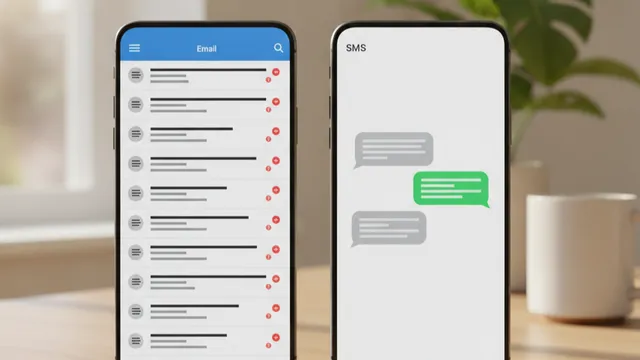
Voice AI and SMS solve different parts of the lead follow-up problem in Australia. Here is how each channel fits into the sequence, and when you need both.
Email follow-up gets ignored. SMS gets opened. But which should you use to follow up with sales leads in Australia? Here is the honest answer.
The question gets asked backwards. Most customers who text a business get no reply. Here is what the data shows and what to do about it.
We map where your leads go quiet, then show you the conversations an agent would have had. Thirty minutes, no obligation.