Speed to Lead
SMS vs Email for Sales Follow-Up: Which Gets More Replies?
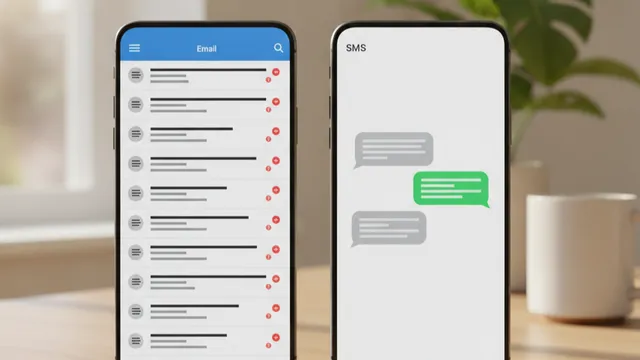
Email follow-up gets ignored. SMS gets opened. But which should you use to follow up with sales leads in Australia? Here is the honest answer.
Voice AI and SMS solve different parts of the lead follow-up problem in Australia. Here is how each channel fits into the sequence, and when you need both.
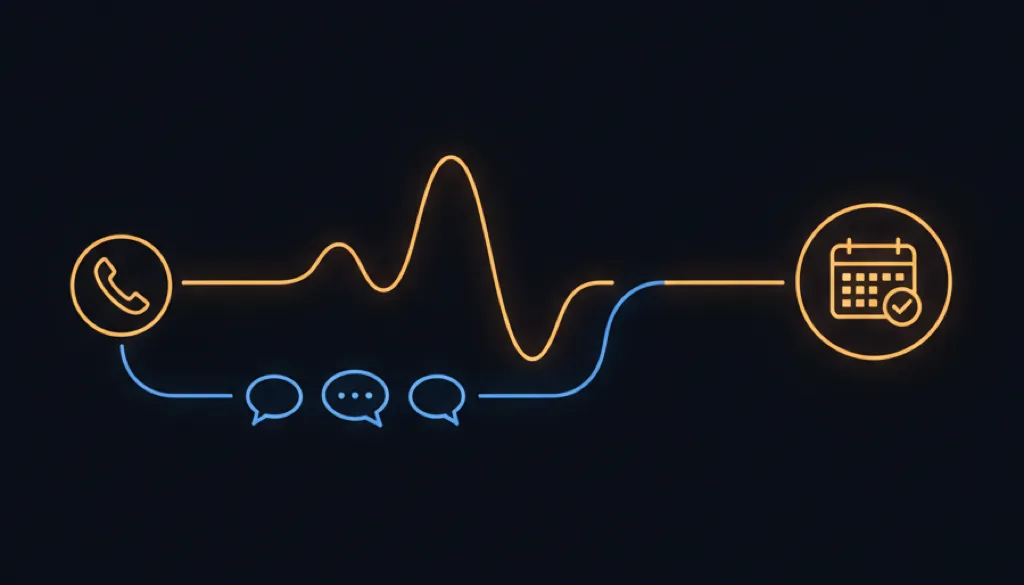
For initial outbound follow-up in Australia, SMS connects more reliably than voice. For inbound calls and complex qualification, voice AI earns its place. The service businesses that get the best results from both are the ones that put them in the right order, not the ones that chose one channel and hoped it covered everything.
Unsolicited calls are common enough in Australia that most people have settled on a simple rule for their mobile: if the number is not saved in their contacts, they do not answer. That rule does not distinguish between a scam call and a legitimate follow-up from a business they enquired with two hours ago. The number is unknown, so the call goes unanswered.
This is the first thing to understand about voice AI for outbound follow-up. The channel faces a connection problem before the conversation quality matters at all.
When a lead fills in a contact form on your website, they have raised their hand. They want a response. But the way they want that response is not always a phone call from a number they have never seen.
An outbound call from your CRM or your AI system will typically come from a number the lead has not stored in their phone. From their side of the screen, there is no way to know it is from you. The practical result is that a meaningful share of leads who genuinely wanted to hear from you do not pick up.
The timing of most follow-up calls makes the connection problem harder. Your business hours and the lead’s availability do not always overlap. A lead who filled in a form during their lunch break is not necessarily available when you ring them at 3pm that afternoon. An evening enquiry is difficult to return during business hours at all.
Voice AI addresses the after-hours problem by operating around the clock. But if the lead does not pick up the call, the availability advantage disappears.
A text message arrives as a notification on a phone the lead is already holding. They read it without committing to a conversation. If the message asks one clear question in plain language, replying takes a few seconds.
“Hi, this is Brent from [company]. You submitted an enquiry about a quote. What suburb are you in and what job needs doing?” is a question most people will answer, at any hour of the day, without treating it as an interruption to their afternoon.
A lead submits an enquiry online at 9pm on a Wednesday. An outbound call at 9pm is too late, and even if the timing were acceptable, it would not be answered from an unknown number.
An SMS at 9pm is different. People text in the evening. If the message is short, direct and asks one clear question, the lead will often reply while they are still thinking about the job. The initial exchange happens within minutes of the enquiry, at the point where the lead is most engaged with it.
This is what speed-to-lead SMS does in practice: the message goes out within 60 seconds of the lead arriving, any hour of the day or night. The five-minute window for initial lead response is real, and SMS is the only channel that can reliably hit it around the clock.
For businesses that take a significant share of their enquiries after hours, SMS is not just an alternative to a follow-up call. For most of those leads, it is the only contact method that makes a connection at all.
Under the Spam Act 2003, commercial SMS messages must include clear sender identification and an opt-out mechanism. These are standard requirements for any automated SMS system and straightforward to manage at volume.
When the lead replies, the agent reads the message and responds with the next qualifying question. Suburb, job type, how soon the work is needed, ownership of the property where that matters. It is a real back-and-forth, not a form, and it runs without anyone at your end watching the thread.
By the time your team looks at the conversation, they know whether the lead is qualified, what the job involves, and whether the person is ready to book. The initial qualification work happens in the background while your team is on site or finishing their previous job.
SMS handles outbound volume. Voice AI handles inbound calls and complexity. The distinction matters most when the job is high-ticket or when the lead arrives on the phone rather than through a form.
For a solar installation, a structural renovation, or a plumbing job that requires a site inspection, a text thread rarely gets to a booked appointment in the same number of touches as a real phone call. The lead has questions that need real answers. “Do you cover the Northern Beaches?” is simple. “Can you start before the end of the month?” might need a calendar check. “What does the scope include?” requires a proper explanation.
A voice AI that answers an inbound call handles these questions in real time. It works from a qualification script, adjusts based on what the lead says, and can book the appointment before the call ends. A text thread covering the same ground takes longer and requires the lead to keep returning to the conversation over a day or two.
Consider a solar business taking enquiries through a web form. The SMS agent qualifies each lead on suburb, roof type, and property ownership. The leads who are serious tend to ring back after the initial exchange. A voice AI that answers that inbound call immediately handles the questions that would otherwise go to voicemail, and the appointment is booked before the salesperson is off their current job site.
The dynamic between voice and SMS is different when the lead calls you. They have decided to have a conversation. A voice AI that picks up immediately is not an interruption. It is meeting the lead where they already chose to be.
This is the scenario where voice AI closes the gap that SMS leaves open. The lead dialled the number. The AI answers, qualifies, and books. That conversion path is cleaner than a text thread that stretches across two days to arrive at the same outcome.
Outbound automated calls are governed by the Do Not Call Register Act 2006, which restricts unsolicited calls to numbers registered on the Do Not Call Register. This is one practical reason why most service businesses use voice AI primarily on inbound calls and rely on SMS for outbound follow-up: the compliance requirements are simpler to manage at scale.
| Voice AI | SMS agent | |
|---|---|---|
| Best for | Inbound calls, high-ticket qualification | Initial outbound contact, after-hours enquiries |
| Connects reliably when | The lead calls you | Any time the lead has their phone nearby |
| Main limitation on outbound | Unknown number, often goes unanswered | Cannot handle complex verbal negotiation |
| AU compliance | Do Not Call Register Act 2006 | Spam Act 2003 |
The two channels are not competing options. They run in a sequence, and the order matters.
Voice AI handles the inbound calls that arrive through the day and the warm qualified leads who want to speak before they book. SMS handles the outbound contact that voice cannot consistently reach.
The answer comes down to two things: what your average job looks like, and where your leads come from.
For a business where most jobs are single-visit repairs or straightforward maintenance, SMS alone handles the qualification volume. The job is easy to scope over text, the booking decision is simple, and the cost of adding a voice layer is hard to justify against the gain.
For a business where most jobs involve a site inspection, a multi-stage project, or a detailed conversation about scope and budget, voice AI starts earning its place. Not as the first point of contact, but as the layer that handles inbound calls and the leads who need to speak with someone before they commit.
Web form submissions and paid ad leads have had no contact with your business yet. SMS is the right first move. They raised their hand without expecting a phone call, and a text that arrives within a minute of the form submission gets read.
A missed inbound call is a different situation. The lead was already ready to talk. The right response is an SMS text-back within 60 seconds, combined with a voice AI that answers the next call if they ring again.
Leads from a database reactivation campaign are almost exclusively SMS territory. These are people you have not spoken to in months or years. A voice call from a number they do not recognise will rarely connect. A short text message that asks one clear question about whether they still need the job done will get replies from leads who are ready now.
SMS is the right starting channel for outbound follow-up in Australian service businesses. It connects at hours when calls cannot, it reaches leads who screen unknown numbers, and it qualifies at volume without a person on the phone.
Voice AI belongs on your inbound calls and behind the SMS layer as the path for qualified leads who want a conversation before they book. It does not work well as the first outbound contact in most service business contexts.
The businesses that get the most from both are the ones that set the sequence up before installing anything, rather than picking one channel and retrofitting the other later. If you want to work out what that sequence looks like for your lead type and average job value, book a free revenue engine audit and we will map it out.
For most Australian service businesses, an AI SMS agent handles initial contact more reliably than a phone answering service, because leads are more likely to reply to a text than to answer a call from a number they have not saved. A voice AI adds real value for inbound calls on high-ticket or time-sensitive jobs, where a real-time conversation changes whether the lead commits to the next step.
Yes. ParadiseAI builds and manages both AI voice agents and AI SMS agents for Australian service businesses, including tradies, mortgage brokers, and financial services operators. The voice agent answers inbound calls, qualifies the lead and books them into a calendar without a human on duty.
Yes. A voice AI agent answers inbound calls around the clock, works through a qualification script and books the caller into an appointment. For outbound follow-up, SMS generally connects more reliably than a call to a number the lead has not saved, so most service businesses end up using both depending on the job type and how the enquiry arrived.
Email follow-up gets ignored. SMS gets opened. But which should you use to follow up with sales leads in Australia? Here is the honest answer.
The question gets asked backwards. Most customers who text a business get no reply. Here is what the data shows and what to do about it.
Most service businesses are staffed for 40 hours of the week. Enquiries land in the other 128. Here is what that gap costs you and how to close it.
We map where your leads go quiet, then show you the conversations an agent would have had. Thirty minutes, no obligation.